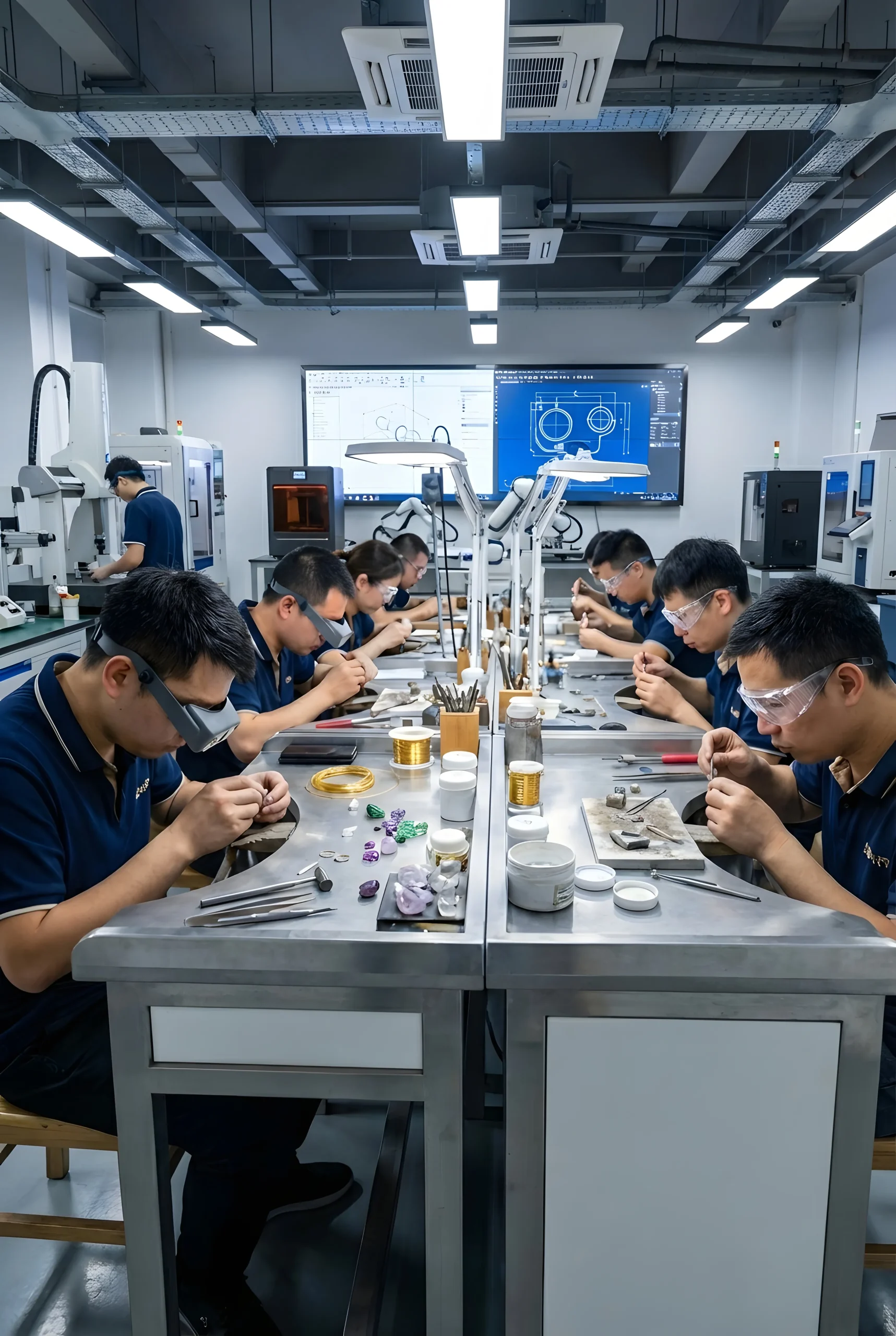
YueF Jewelry operates within the jewelry network of Panyu District, Guangzhou, Guangdong. The district is known for a concentration of jewelry manufacturing and trade capabilities. For a customer, the location matters only when it translates into clearer specifications, coordinated workmanship, and accountable quality checks.
What YueF connects
Product development, CAD communication, model and casting coordination, stone setting, polishing, plating, quality inspection, packing, and customer support can follow one confirmed brief instead of becoming disconnected tasks.
Why Panyu is relevant to jewelry production
Fine jewelry production requires more than a single bench. A design may move through digital modeling, mold or model preparation, casting, cleanup, stone matching, setting, polishing, surface finishing, inspection, and packing. Panyu’s established supplier and craft network places many of those capabilities within practical reach.
Location alone is not a quality guarantee. The value comes from selecting suitable specialists, communicating tolerances, checking work between stages, and refusing pieces that do not match the approved specification.
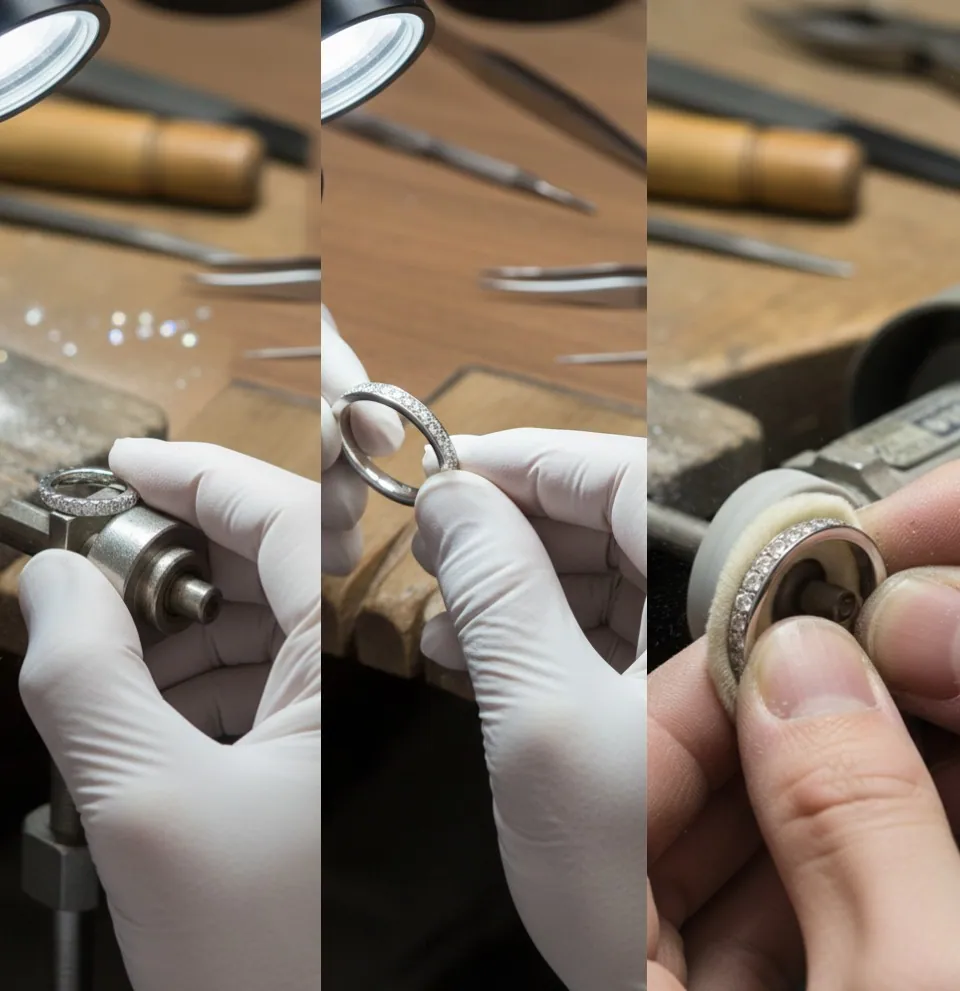
Small construction details determine how a piece looks, feels, and wears.
The brief is the reference point
For a collection item, the reference is the product specification. For custom jewelry, it includes customer goals, measurements, stone choice, metal, finish, budget, timing, and approved CAD. A clear brief reduces avoidable interpretation.
- Dimensions should be stated in measurable terms, not only visual adjectives.
- Ring size, chain length, engraving, metal color, and stone shape need explicit confirmation.
- Reference images explain direction but should not be used to copy protected work.
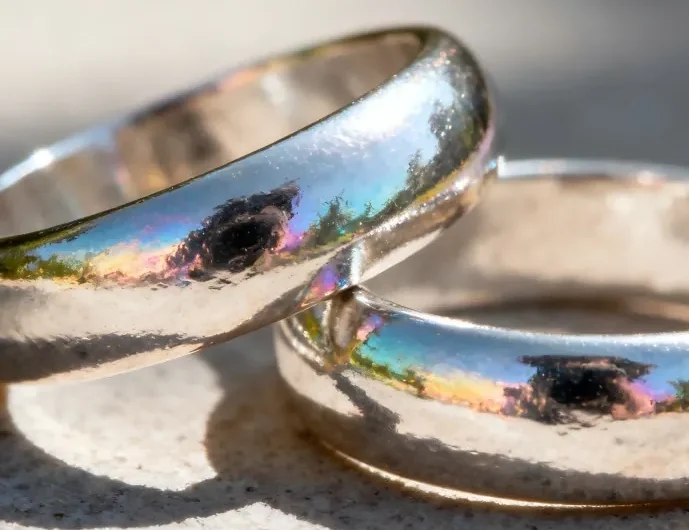
- CAD approval confirms form and proportion; physical material still creates real-world variation in reflection and hand finishing.
Connected capabilities, different responsibilities
Design and CADTranslate an idea into dimensions, structure, setting type, and an approval image.
Bench and settingTurn the approved structure into metal, prepare surfaces, and secure stones.
Finish and inspectionPolish, plate where specified, inspect appearance and function, then pack.
The roles are connected, but they are not interchangeable. A beautiful rendering does not replace secure prongs; a bright polish does not correct an inaccurate ring size. Inspection must consider the whole piece.
What a practical quality review checks
- Correct item, size, metal, finish, stone, and engraving against the order.
- Stone seating, prong contact, symmetry, and visible security.
- Clasp, hinge, post, link, and moving-part function.
- Surface consistency, polishing, plating coverage, and avoidable tool marks.
- Edges, comfort, dimensions, and obvious deformation.
- Required certificate, packaging, and order documentation.
No inspection can prevent every future impact or normal wear. Its purpose is to identify avoidable issues before shipment and to confirm that the piece matches the approved order.
Inspection connects the production record to the piece a customer receives.
Where the customer fits in a custom project
A strong custom result is collaborative. The customer defines the purpose and approves key choices; the jewelry team explains feasibility, tradeoffs, and production constraints. Before approval, verify size, dimensions, spelling, metal color, stone specifications, budget, and timing.
For step-by-step ordering, revisions, CAD approval, and production expectations, use the Custom Jewelry page. For the company overview, values, and operating location, visit the YueF Jewelry Story.
YueF Jewelry contact location
YueF Jewelry customer contact location is No. 153 Shanan Road, Shatou Street, Panyu District, Guangzhou, Guangdong, China. Contact customer care before planning a business visit or sending any parcel. Approved returns must use the address in the RMA instructions, which may differ.