How to Choose Stud Earring Size for Your Face and Style
- Post author:Emma leo
- Post published:2026年7月27日
- Post category:All products
- Post comments:0 Comments
Earring size guide
How to choose stud earring size for your face and style
Use millimeter size, earlobe space, piercing placement, setting design, and the look you want to choose studs that feel intentional rather than simply small or large.
Stud size guide
3 mm
Delicate

5 mm
EVERYDAY
7 mm
MORE PRESENCE
The best stud earring size is the one that sits comfortably within your earlobe and creates the amount of presence you want. Face shape can help refine the look, but visible diameter, piercing position, setting footprint, hairstyle, and occasion usually matter more.
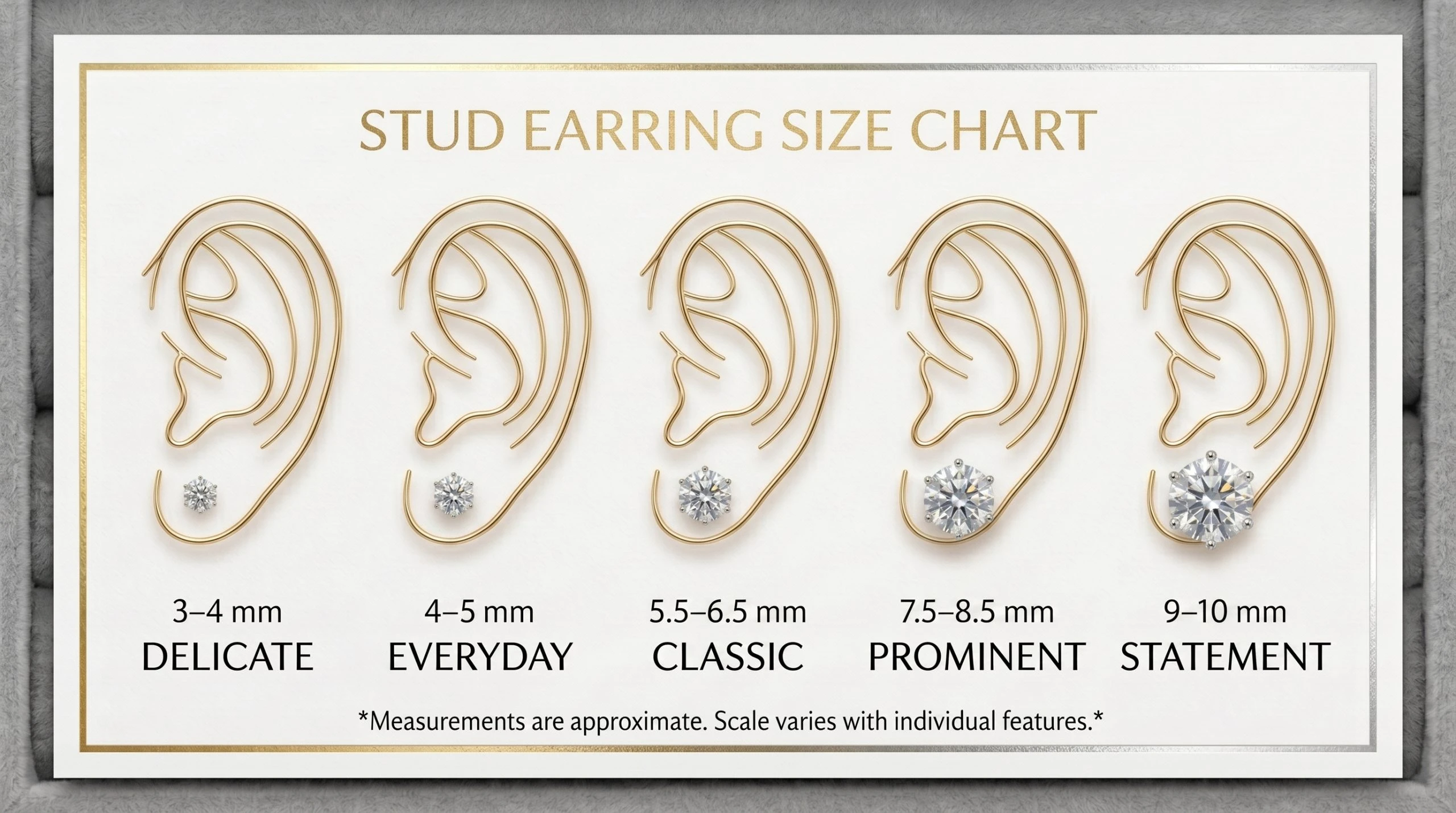
Start around 5–6 mm for a subtle everyday stud, 7–8 mm for a classic visible look, or 9–10 mm for stronger presence. Then check that the complete setting stays supported by the lobe without pulling, tipping, or extending farther than you prefer.
How stud earring size is measured
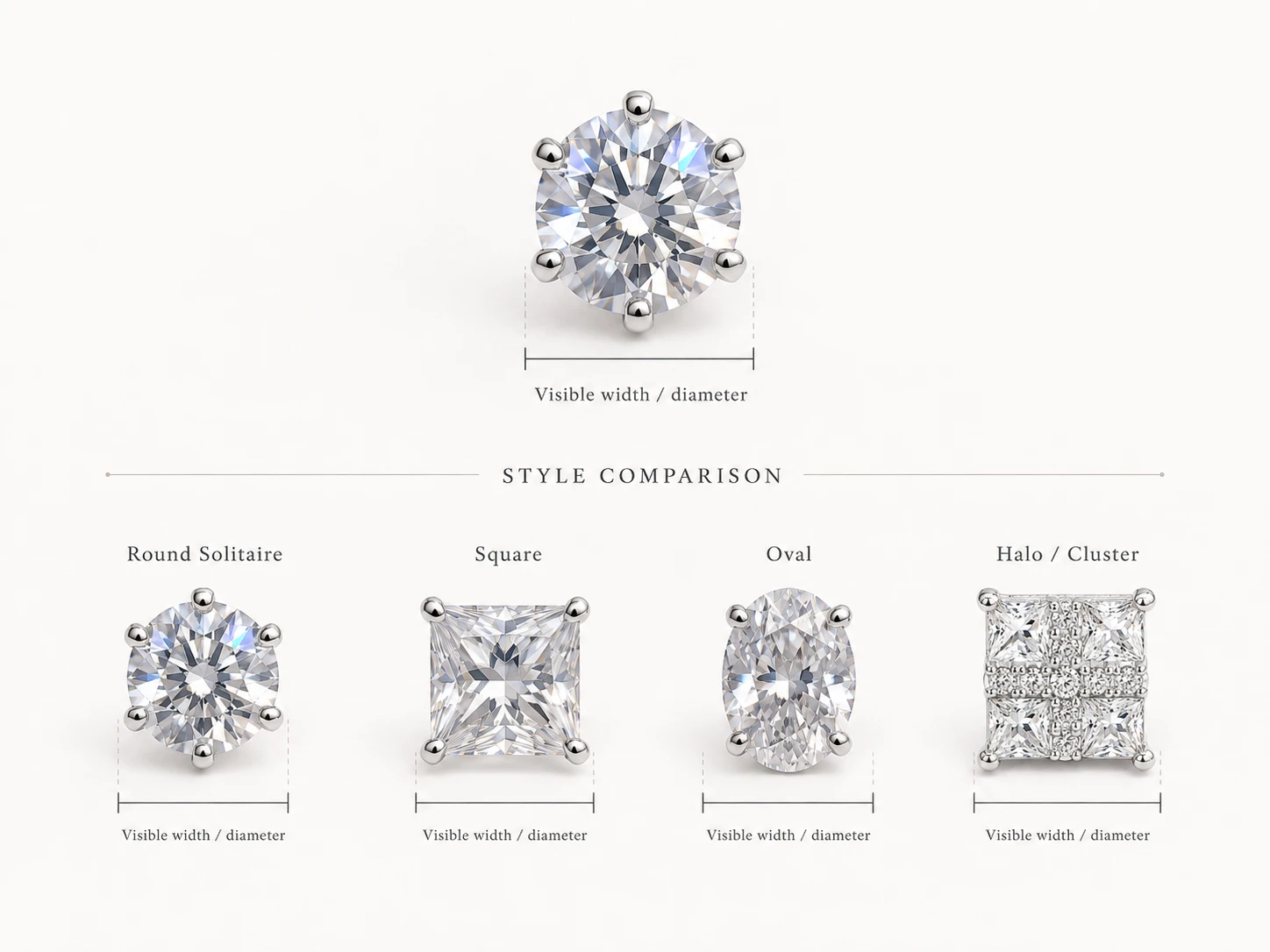
Stud size is usually described by the width of the visible front in millimeters. For a round solitaire, that is its diameter. For a square, oval, cluster, or irregular design, check both width and height. The setting can add visible size beyond the center stone: a bezel, halo, frame, or cluster may look noticeably larger than a minimal prong setting with the same stone.
Do not treat carat weight as a direct millimeter measurement. Carat measures mass, not face-up width. Different gemstones, cuts, proportions, and settings can have different dimensions at the same weight. Earring listings may also state weight per ear or total carat weight for the pair, so review the product dimensions before comparing styles.
Stud earring size chart
| Visible size | Typical impression | Often chosen for |
|---|---|---|
| 3–4 mm | Very discreet and delicate | Second piercings, small lobes, minimal styling |
| 5–6 mm | Light everyday presence | Daily wear, quiet office looks, easy stacking |
| 7–8 mm | Classic and clearly visible | A versatile main-lobe stud or signature pair |
| 9–10 mm | Prominent without being oversized on many ears | Dressed-up looks, fuller lobes, stronger contrast |
| 11 mm and above | Statement scale | Events, bold styling, large clusters or halos |
These ranges describe visual scale, not a universal fit standard. A 7 mm halo can occupy more earlobe space than a 7 mm solitaire, and the same pair can look different when the piercing is centered, high, low, or close to the outer edge.
Let earlobe space and piercing placement lead
Look straight at the ear and estimate the clear space around the piercing. A centered piercing with room below it can support a broader stud without appearing crowded. A low piercing, small attached lobe, or piercing close to an edge may suit a smaller or lighter setting. If the front overlaps the lobe edge, that can be a deliberate statement, but it should not feel unstable.
Small or narrow lobeBegin with a compact footprint and a low-profile setting. Check the earring from the front and side.
Balanced lobe spaceMost mid-size studs work well; choose by desired visibility and setting style.
Fuller lobeA larger stud, halo, or cluster can maintain proportion, though a small stud still works for a minimal look.
Comfort is also part of fit. A heavy front can tilt downward even when its width looks appropriate. A supportive back, secure post, and balanced construction can matter as much as diameter. Stop wearing an earring that causes soreness, stretching, persistent redness, or pressure, and seek professional advice for a new or irritated piercing.
Use face shape as a visual guide, not a rule
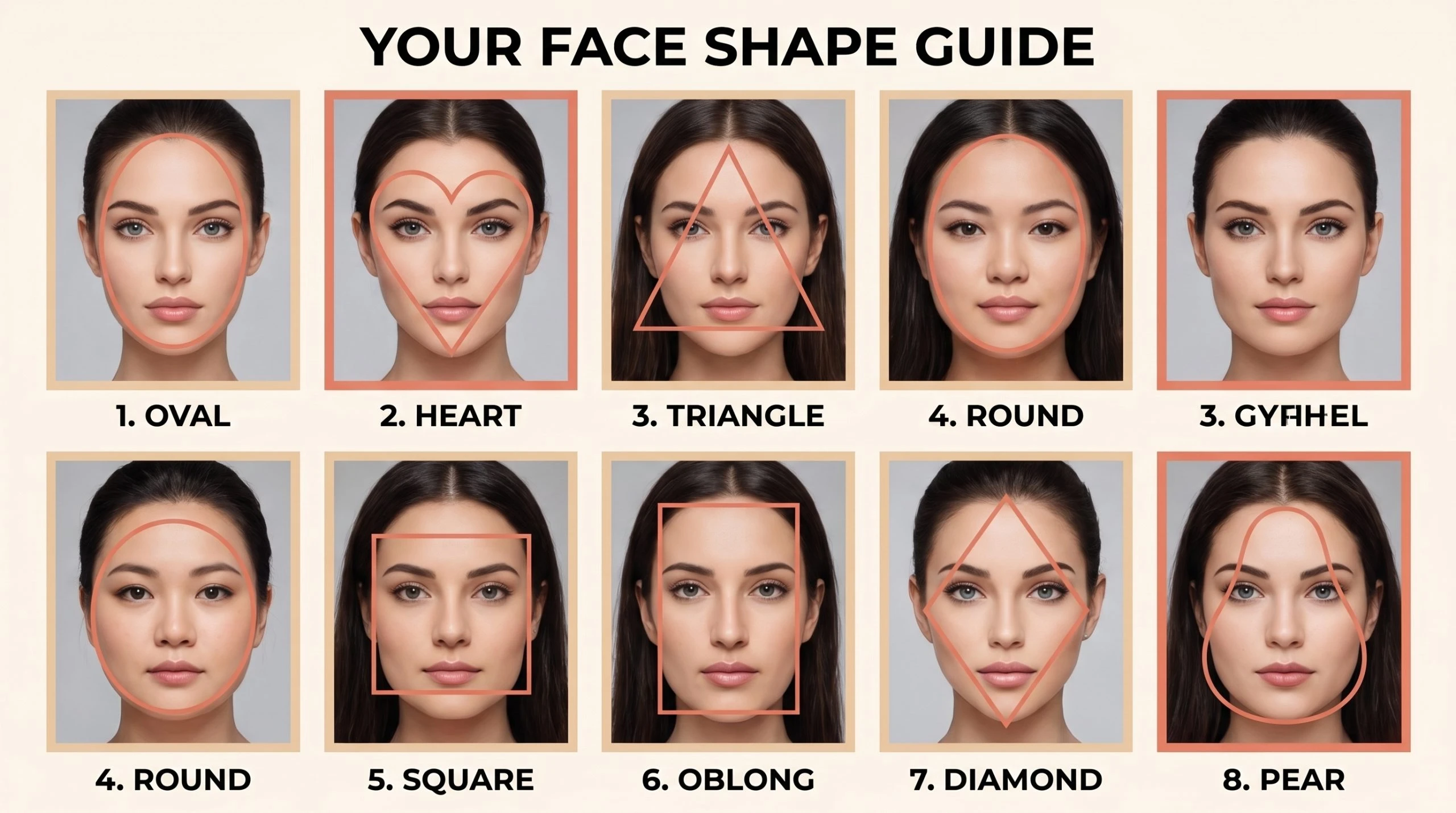
Studs sit close to the face, so their effect is more subtle than long drop earrings. Face-shape guidance is best used to choose contrast or repetition. Round or softly curved faces can gain definition from geometric, square, or angular studs. Square faces and strong jawlines can be softened with round stones, pearls, or curved halos. Longer or oblong faces often carry round, clustered, or horizontally weighted studs well. Heart and diamond shapes can use balanced round studs or designs with a little width near the lobe. Oval faces are visually flexible across most shapes.
Compare overall proportions and jawline rather than treating any outlined category as a fixed rule.
If you are unsure of your face shape, take a straight-on photo with hair pulled back. Compare face length with width, then notice whether the forehead, cheekbones, or jaw is widest. Finally, look at whether the jawline is rounded, straight, or tapered. The aim is not to find a perfect label; it is to understand which lines you may want your earrings to echo or contrast.
The same proportion principles apply across personal styles: use shape to guide balance, then choose the effect you actually enjoy.
Choose the amount of presence for your style and occasion
Quiet and practicalTry 3–6 mm, a clean solitaire, or a low-profile bezel for subtle daily wear.
Contrast changes apparent size. A bright stone against dark hair or a polished white-metal setting against warm skin may read more prominently. Yellow or rose tones can either blend or stand out depending on skin tone and styling. There is no required match: decide whether you want the stud to merge gently into the look or act as a clear focal point.
A three-step way to choose confidently
- Check the actual dimensions. Use millimeters for the complete visible front, not only a carat label or center-stone estimate.
- Compare the footprint with your lobe. Hold a paper circle of the stated diameter beside the piercing, or compare it with a ruler in a straight-on photo. Do not place unclean objects against a piercing.
- Choose the visual intention. Go smaller for restraint, near the middle of your available lobe space for balance, or larger for deliberate impact. Confirm weight, post length, and backing style before buying.
Product photos are not always shown at life size. Check the listed millimeter dimensions and setting details on the product page. For help comparing a specific YueF stud with your piercing placement, contact customer care with a straight-on ear photo and the approximate available lobe space.
Frequently asked questions
Choose with confidence