
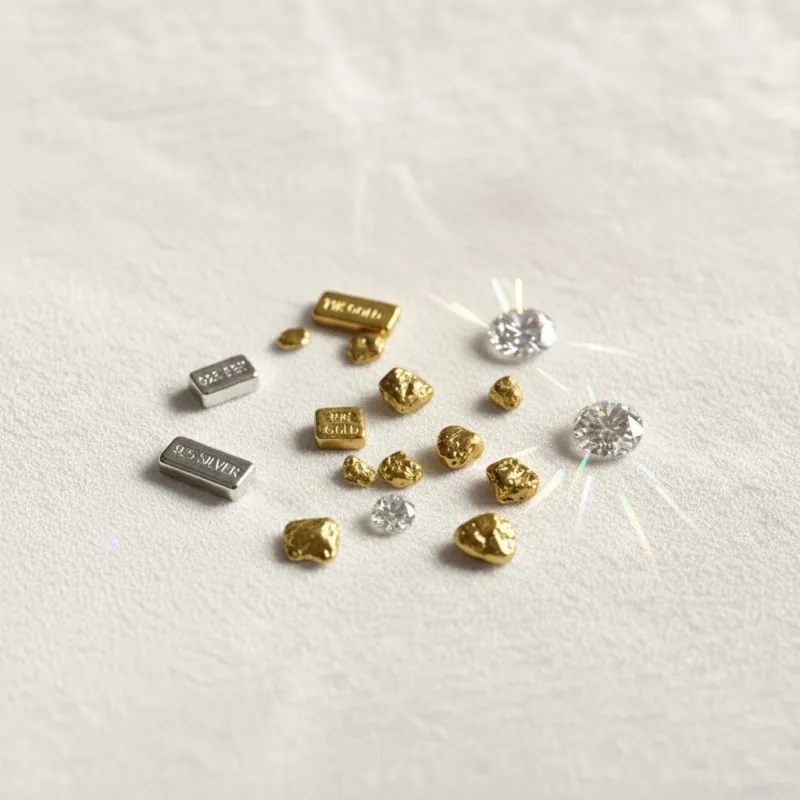
Why Gold, Silver, and Rose Gold Jewelry Look Different
- Post author:Emma leo
- Post published:2021年8月27日
- Post category:Sterling 925 Earring
- Post comments:0 Comments
Metal science
Why precious metals do not all look the same color
A jewelry color is the result of pure metal, alloy recipe, plating, polish, texture, lighting, and wear. Here is how each layer changes what you see.
YueF Jewelry EducationUpdated July 24, 20267 minute read
Pure gold is naturally yellow, pure silver is white-gray, and copper is reddish. Most wearable jewelry is not made from a completely pure metal because alloying can improve hardness, durability, casting behavior, and color. That is why two pieces both called “gold” can look noticeably different.
Metal color changes because jewelers combine metals in different proportions and sometimes add a plated surface. Karat, alloy ingredients, polish, texture, light, and normal surface wear all influence the final appearance.
Pure metals set the starting color
Gold’s characteristic color comes from how its electrons absorb and reflect visible light. Silver reflects a broad range of visible wavelengths and appears bright white-gray when polished. Copper absorbs more blue-green light and appears orange-red. Alloying mixes these optical characteristics.
Pure gold is soft for many everyday structures. Pure silver is also relatively soft. Jewelry alloys are engineered to balance appearance with the mechanical properties needed for prongs, clasps, chains, and rings.
Karat and alloy recipes
Karat measures the gold proportion in a gold alloy: 24K is nominally pure gold, 18K is 75% gold, and 14K is approximately 58.3% gold. The remaining metals are not a single universal recipe.
An 18K yellow alloy usually looks richer because it contains more gold, but recipes differ between manufacturers. Two 14K items can also differ slightly in warmth.

Yellow-gold appearance depends on gold content, alloy recipe, surface finish, and illumination.
Why white gold, rhodium, and silver differ
White gold is not usually a paper-white metal. Its underlying alloy may have a warm gray or pale yellow cast. Rhodium plating creates the brighter mirror-white surface many customers associate with white-gold jewelry.
Sterling silver is a separate alloy: 92.5% silver plus strengthening metals. Polished sterling can look slightly softer or grayer than fresh rhodium. It can also tarnish, while an intact rhodium surface is more resistant to that silver-darkening reaction.
Texture and light change the same alloy
- High polish produces sharp, mirror-like reflections and can look darker or brighter depending on what it reflects.
- Brushed or satin finish scatters light, softening contrast and making the color look quieter.
- Hammering and faceting create many reflection angles, so color appears to move.
- Warm indoor light intensifies yellow and rose tones; cool daylight can emphasize white and gray.
- Phone processing and displays alter white balance, saturation, and contrast.
Compare jewelry in indirect daylight and against a neutral background before deciding that a color is wrong.
Why metal color changes with wear
Skin chemistry, sulfur compounds, humidity, cosmetics, chlorine, salt, cleaners, and friction affect surfaces. Sterling silver can tarnish. Copper-rich alloys may develop patina. Plating can thin at contact points and reveal a different-colored layer beneath.
These changes have different remedies. Tarnish on unplated sterling may respond to suitable polishing; worn plating usually requires professional replating. Aggressive home polishing can remove plating faster.
Frequently asked questions
Continue learning