

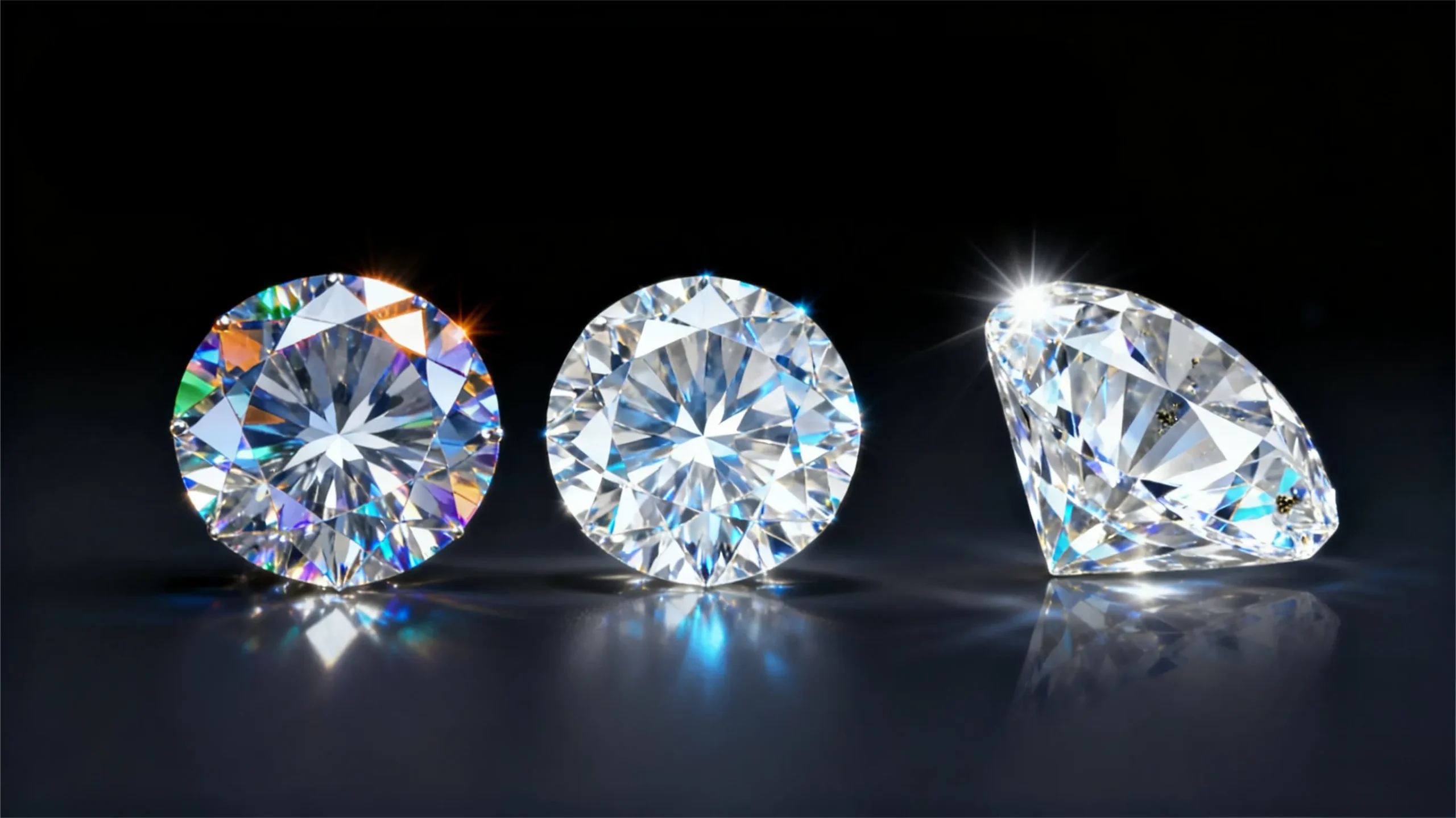
When it comes to choosing a center stone for your jewelry, diamonds have long been the traditional choice. However, moissanite has emerged as a popular alternative in recent years. But what exactly is the difference between these two sparkling stones? Let's explore their origins, physical properties, and how they compare in various aspects.
Origin and Formation
Diamonds are natural gemstones formed deep within the Earth's mantle under extreme heat and pressure over billions of years. They're composed of carbon atoms arranged in a crystal structure. While natural diamonds are mined, lab-grown diamonds have become increasingly common, created in controlled environments that replicate the natural formation process.
Moissanite, on the other hand, was first discovered in 1893 by French scientist Henri Moissan in a meteor crater. Natural moissanite is extremely rare, so all moissanite used in jewelry today is lab-created. It's composed of silicon carbide, a different chemical composition from diamonds.
"While both stones offer exceptional beauty, understanding their differences can help you make a choice that aligns with your values, budget, and aesthetic preferences."
Physical Properties
Hardness
Diamonds rank a perfect 10 on the Mohs hardness scale, making them the hardest known natural material. Moissanite ranks 9.25, which is still extremely durable for everyday wear.
Brilliance and Fire
Moissanite typically exhibits more fire (colorful flashes) than diamonds, while diamonds tend to have more brilliance (white light reflection). This gives each stone a distinct sparkle.
Density
Moissanite is less dense than diamond. A moissanite stone of the same carat weight as a diamond will appear slightly larger.
Color
Most diamonds used in jewelry are nearly colorless with subtle hints of yellow or brown. Moissanite is typically colorless or near-colorless, with some stones exhibiting a slight yellow or green tint.
Price Comparison
One of the most significant differences between moissanite and diamonds is their price. Moissanite is generally much more affordable, often costing only 10-20% of the price of a diamond of similar size and quality. This price difference makes moissanite an attractive option for those working within a budget or looking for a larger stone for their money.

Ethical and Environmental Considerations
Both natural diamonds and moissanite have ethical considerations. Natural diamond mining has faced criticism for environmental impact and association with conflict zones (though many jewelers now adhere to ethical sourcing standards like the Kimberley Process).
Lab-created moissanite has a smaller environmental footprint than mined diamonds, requiring less energy and resources to produce. For environmentally conscious consumers, this can be an important factor in their decision.
Which One Should You Choose?
The choice between moissanite and diamond ultimately comes down to personal preference, budget, and values:
- Choose a diamond if you value tradition, natural origin, and the stone's long-standing reputation as a symbol of enduring commitment.
- Choose moissanite if you're looking for exceptional value, a larger stone for your budget, and prefer a lab-created option with less environmental impact.
Both stones offer stunning beauty and durability for jewelry. With proper care, either choice will provide years of enjoyment and sparkle.
Comments (300)

Michael Thompson
2 days agoGreat article! I was torn between moissanite and diamond for my engagement ring, and this helped me make my decision. I went with moissanite and couldn't be happier with the sparkle!

Sarah Johnson
1 week agoI appreciated the section on ethical considerations. It's important to know where our jewelry comes from and what impact it has on the environment.